Seasonal Forecast: A Wetter-Than-Normal Summer for the East; Heat and Wind in the West
Vox Weather Meteorologist Annette Botha gives us the details on the 2025 / 2026 summer season – looking back on some of the drama that the weather has recently thrown at us, and what we can expect going into next year.
You can also click here to see Annette presenting this information in a short video in Afrikaans, as part of the regular ‘Langtermyn Landbou-Weervoorspelling’ series, and experience some spectacular additional video footage of recent weather-related visuals that are highlighted here.
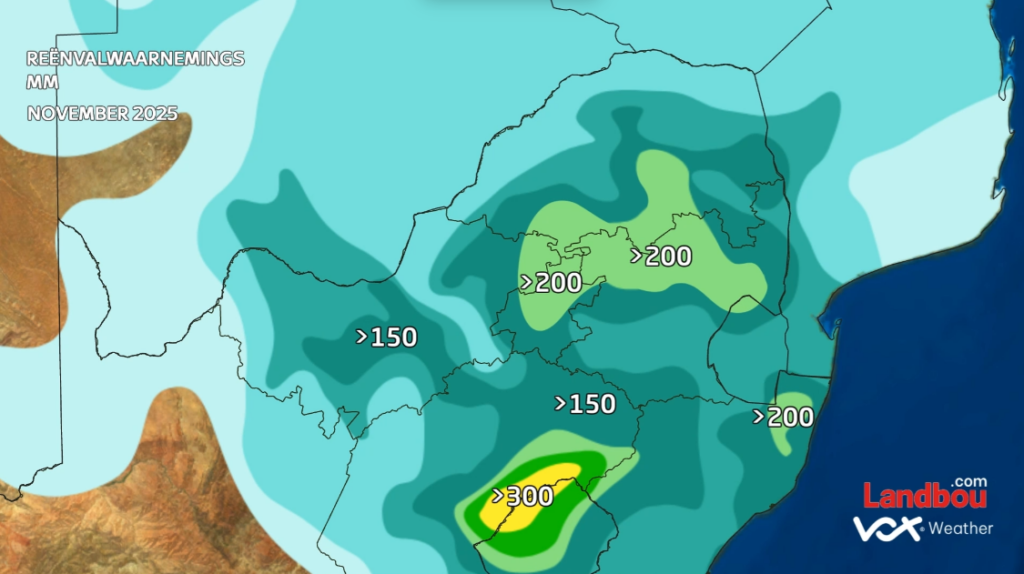
South Africans have just come through one of the most dramatic Novembers in recent years – it was a month marked by relentless thunderstorms in the north and east, with widespread hail, local flooding, and strong winds in the Western Cape.
Now, as we turn the corner into December, the latest seasonal forecasts point to a summer of strong contrasts: wet, stormy and cooler in the east, but hot, windy and fire-prone in the west.
A Record-Breaking End to Spring
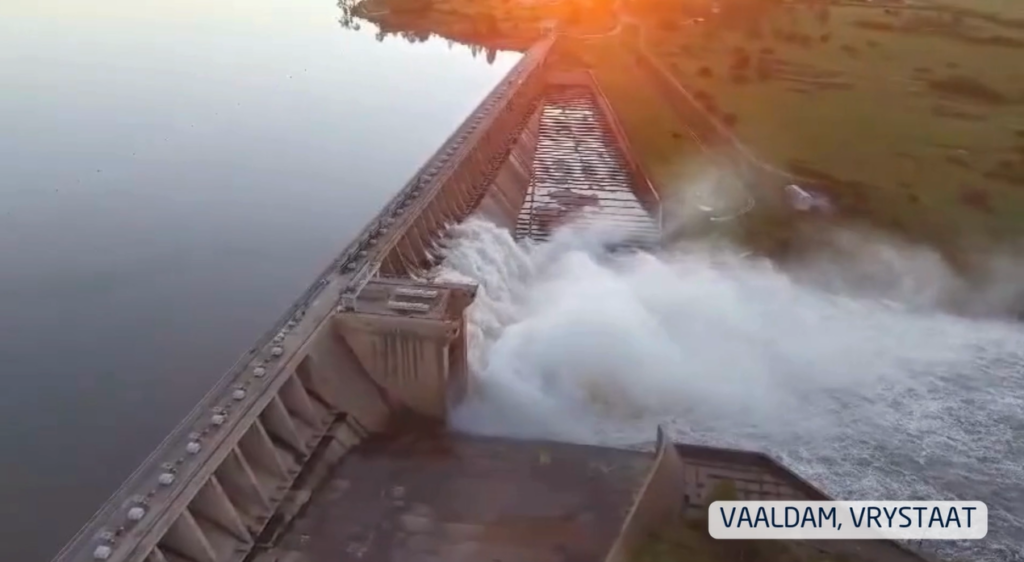
November delivered an onslaught of thunderstorms across Gauteng, Limpopo, North West, the Free State and the drought-stricken Eastern Cape. Many large dams responded quickly: the Vaal, Gariep and Bloemhof Dams rose sharply, with several spilling over.
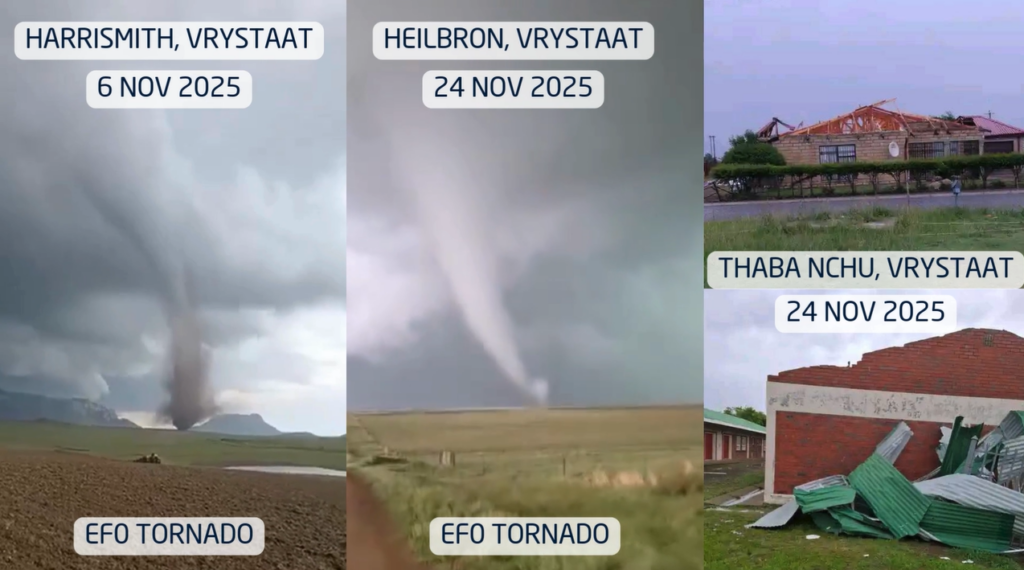
Thunderstorms were fuelled by unstable, moisture-rich tropical air that repeatedly surged across the interior. More than one EF0 tornado was reported in parts of the Free State, a reminder that South Africa’s ‘tornado corridor’ can produce short-lived but destructive events almost every summer.
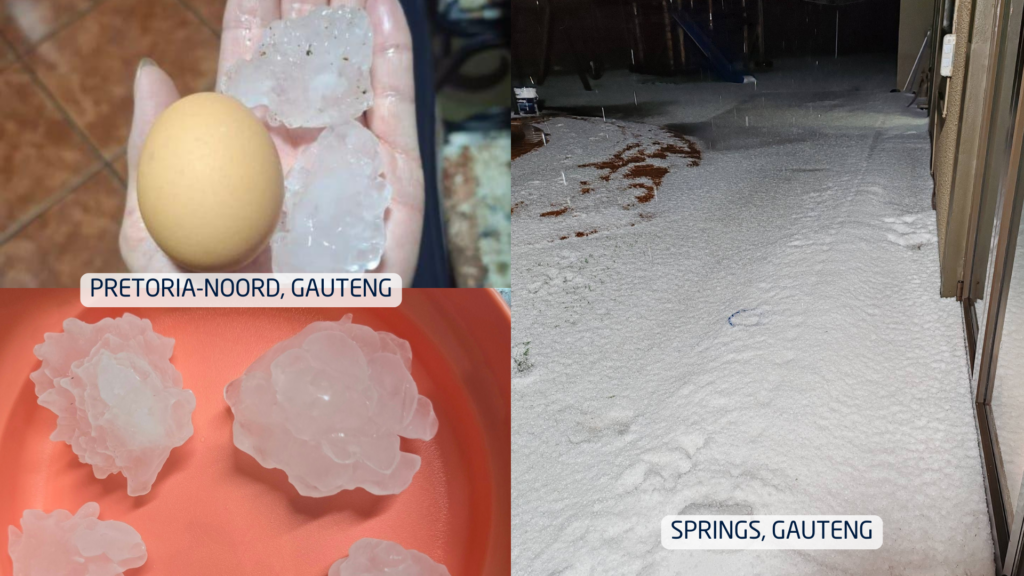
Hail was another standout feature of the month. In some towns, small hail accumulated so thickly that streets resembled winter scenes, trapping cars and residents. In other areas, hail the size of chicken eggs caused extensive damage to vehicles, roofs, gardens and crops. Farmers across the Free State and neighbouring regions faced the difficult balance of ‘good rain, but big losses’.
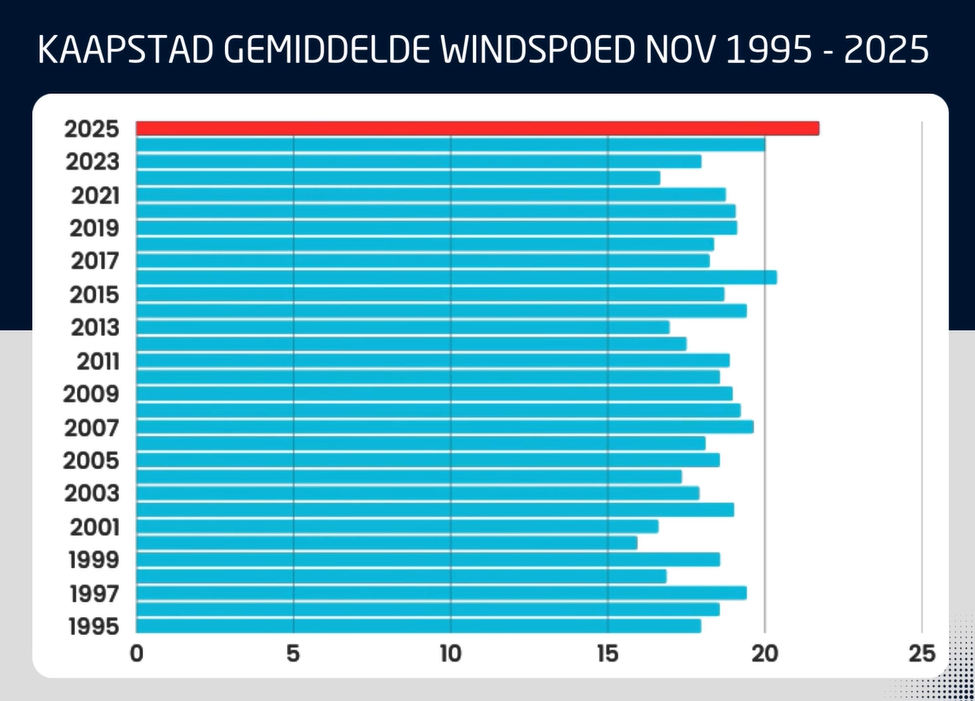
Meanwhile, in dramatic contrast, the Western Cape battled powerful southeasterly winds, fanning multiple wildfires across the Cape metro and agricultural zones. Homes were evacuated and producers faced early-season challenges with wind damage, low soil moisture, and fire risk.
How Much Rain Actually Fell?
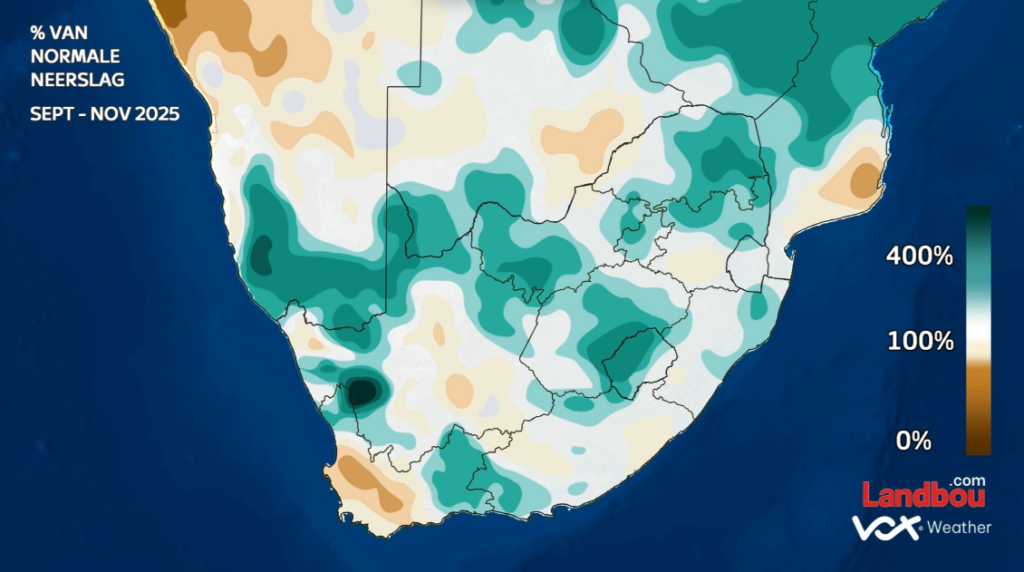
November did not just feel wet, it was exceptional. Large areas of the summer rainfall region recorded more than 150mm for the month, with pockets exceeding 200mm. To put this into perspective: Pretoria’s long-term November average is around 90 mm. Many regions received more than double their normal rainfall.
While the interior soaked, the Karoo, Eastern Cape and Western Cape experienced a notably drier spring, aligned with the persistent windier pattern that dominated the southwest.
December Wind Outlook: More Gusts on the Way
November 2025 was confirmed as the windiest November since 1995 over the Western Cape based on 30-year wind-speed averages.
Unfortunately for Capetonians, the models show continued above-normal windiness in December.
This raises wildfire danger even further heading into the heart of the festive season.
Dams, Climate Drivers and What is Shaping the Season
Dam levels remain high across the interior and are expected to climb further with continued rainfall. In contrast, dams in the Western and Southern Cape are dropping quickly, with some municipalities already preparing for potential water restrictions.
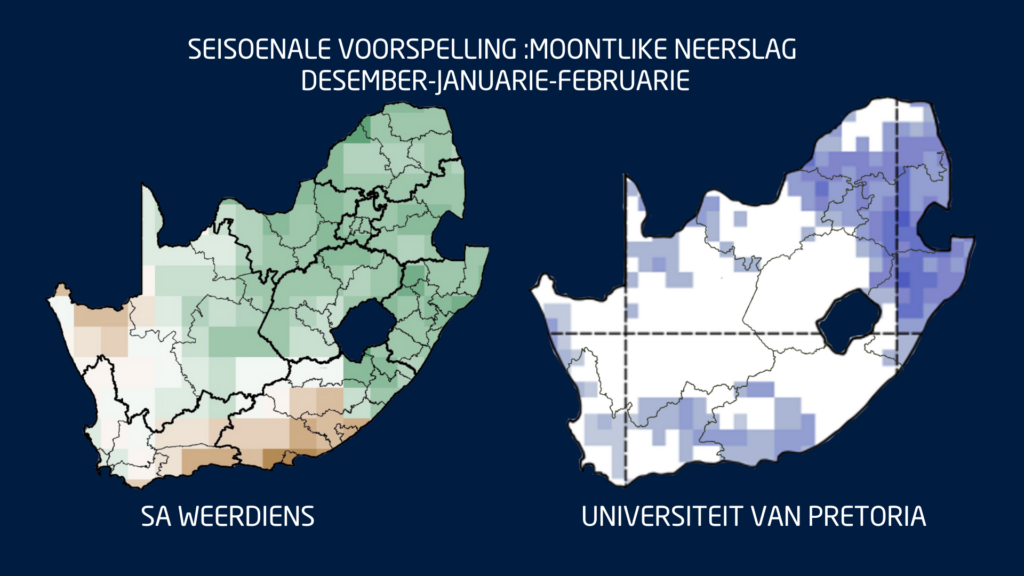
Globally, the climate system is reinforcing the wet-summer signal. We remain in La Niña conditions, and the Indian Ocean Dipole (IOD) is in a negative phase, a combination that historically supports above-normal summer rainfall for South Africa’s summer rainfall belt.
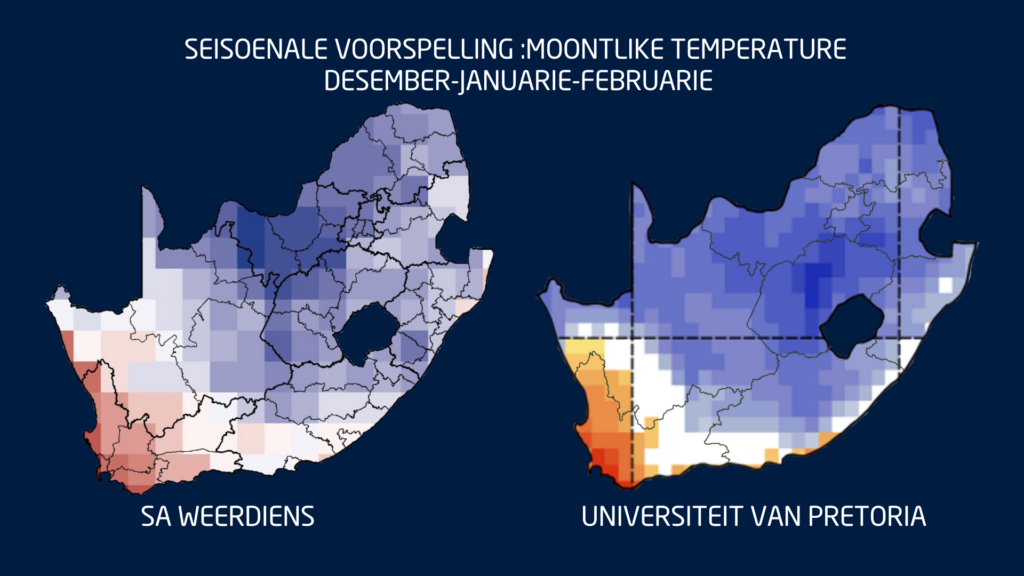
This means that December through February (DJF) still shows strong model agreement: a wetter-than-normal summer across the central and eastern parts of South Africa.
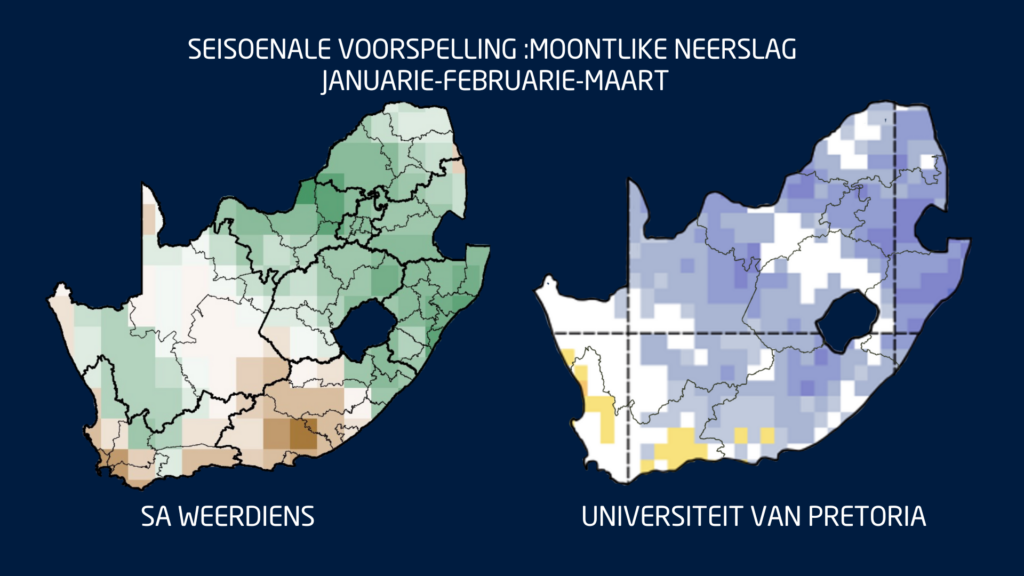
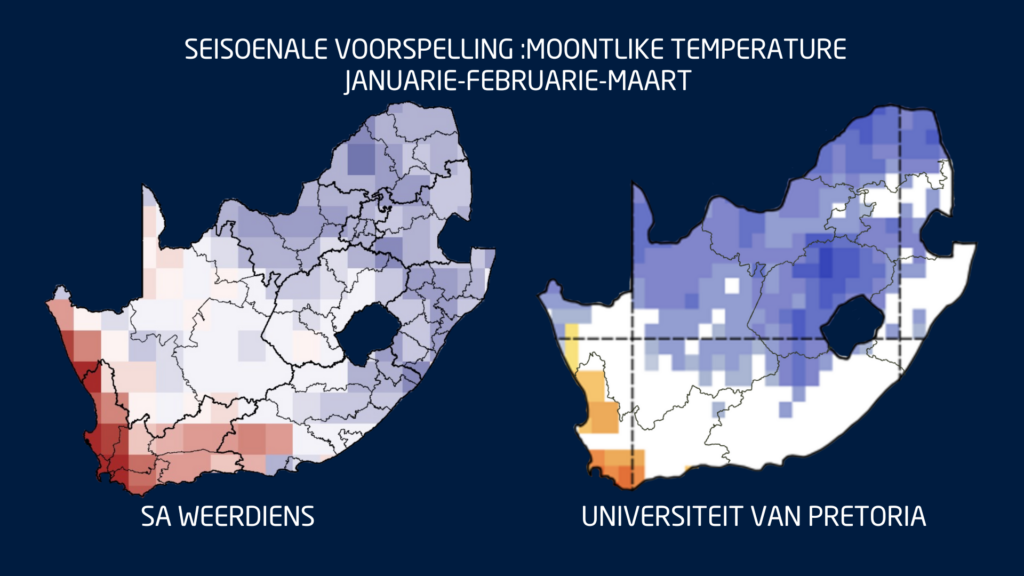
The only region where uncertainty remains is the Eastern Cape, ironically one of the provinces most in need of sustained rain. Seasonal guidance for January to March (JFM) keeps the same pattern: above-normal rainfall inland, with drier-than-normal tendencies persisting over parts of the Southern Cape.
Temperatures: Cool in the East, Very Hot in the West
Where rainfall increases, maximum temperatures are expected to trend lower. Much of the summer rainfall region may see cooler-than-normal daytime temperatures through summer and early autumn.
However, the Western Cape, Northern Cape and Namakwa can expect very hot, windy conditions, especially toward the end of summer and into early autumn, a period when fire danger typically peaks.
What to Expect Week to Week
Short-term and sub seasonal models show a continued pattern of:
Repeated thunderstorm activity over the central and eastern interior;
Occasional heavy rain and local flooding;
Persistently gusty southeasterly winds in the southwest; and
Episodic heatwaves in the western interior
Farmers, disaster managers and residents should prepare for a summer with sharp contrasts: regular storms and good rain inland, and ongoing heat and fire risk in the west.
And finally a quick note to close off the year:
The Vox Weather ladies will be on annual leave for the festive season, but Vox Weather followers will still receive the daily weather maps throughout the period.
And so from Annette and Michelle: Wishing you a wonderful holiday period – travel safely and know that Vox Weather is always here to help you with your planning and continue ‘putting the WE back into Weather’!
Beyond the Forecast: Blue Skies, Safe Landings!
Discovering one of life’s ultimate thrills: skydiving
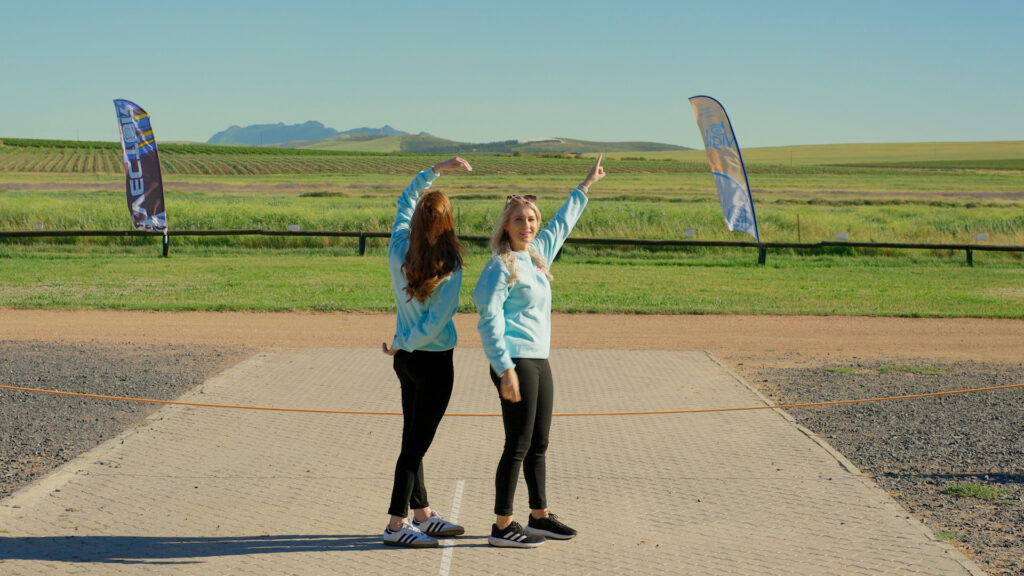
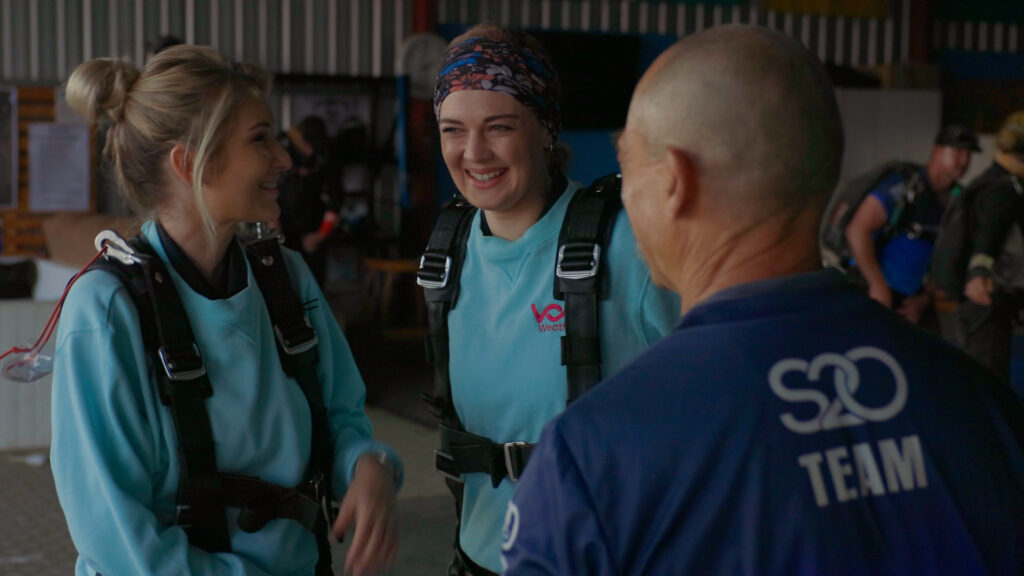
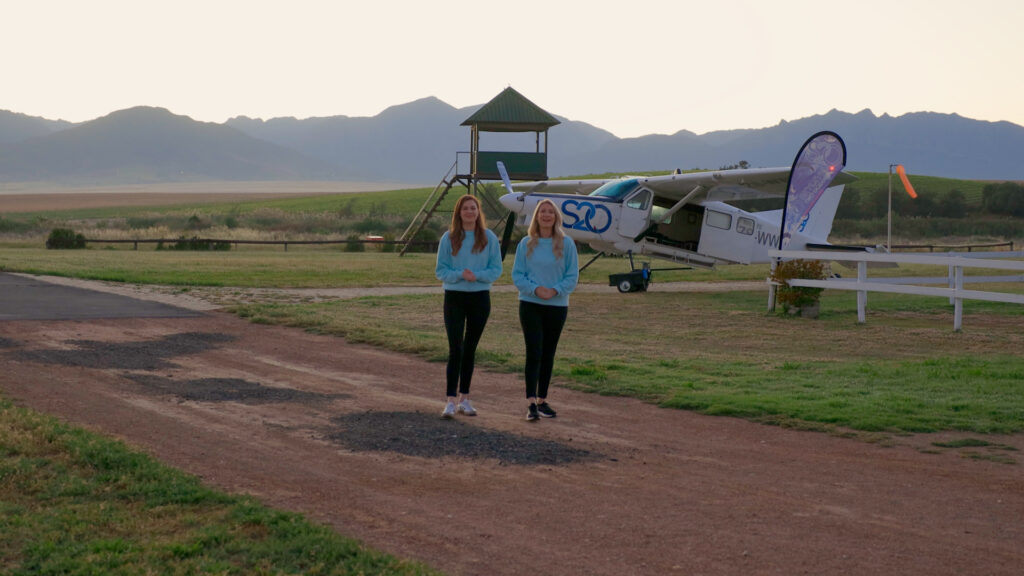
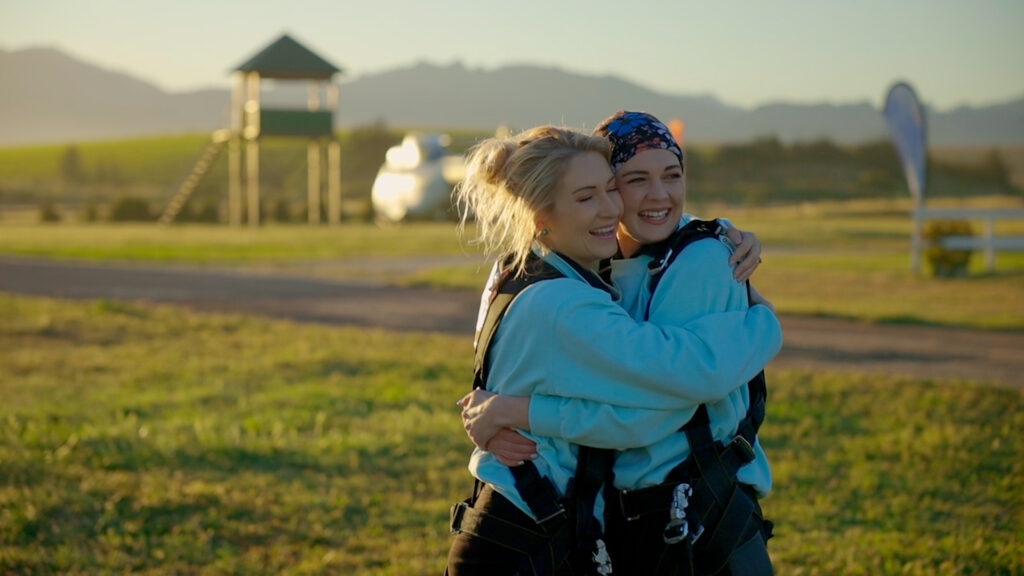
Vox Weather Meteorologists Annette Botha and Michelle Cordier decided to try out skydiving for themselves in the ongoing quest to go ‘beyond the forecast’.
We’re used to thinking of the weather as being something that shapes our everyday lives: going to and from work or the shops; checking in with friends and family; going to the mall; planning social get-togethers; playing sport; worrying about home and garden maintenance… the list goes on. Whether we’re experiencing sunshine, wind, rain or even snow, the weather plays a big role in the planning of our daily lives.
But what about those brave (or quite mad?) people who worry about the weather simply because they’re planning to fling themselves out of a perfectly good aeroplane at the weekend – in other words, skydivers?
You might remember Annette and Michelle’s previous adventure in the air when they went paragliding. Although both of these aerial sports involve parachutes, skydiving is a very different experience to paragliding – as we’re about to find out.
And so we look at some of the factors that determine when you can take a plane ride up into the sky before choosing to fling yourself back out of it, and when it might be best to stay on the ground, no matter how experienced a skydiver you might be.
Once again, Annette and Michelle bring us an idea in real life of how weather plays a critical role in shaping a unique aerial sport.
The Adrenaline Junkie’s Choice
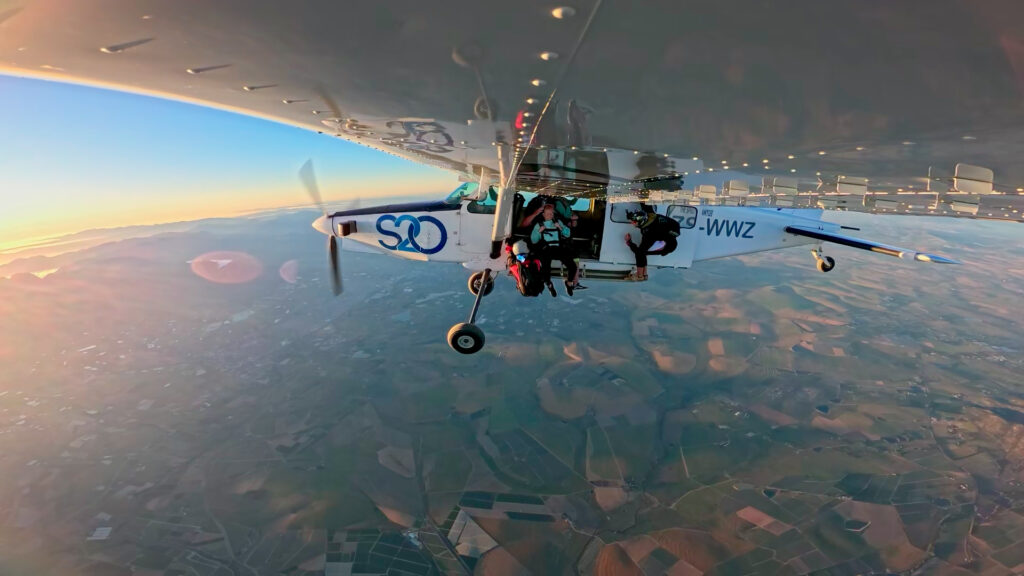
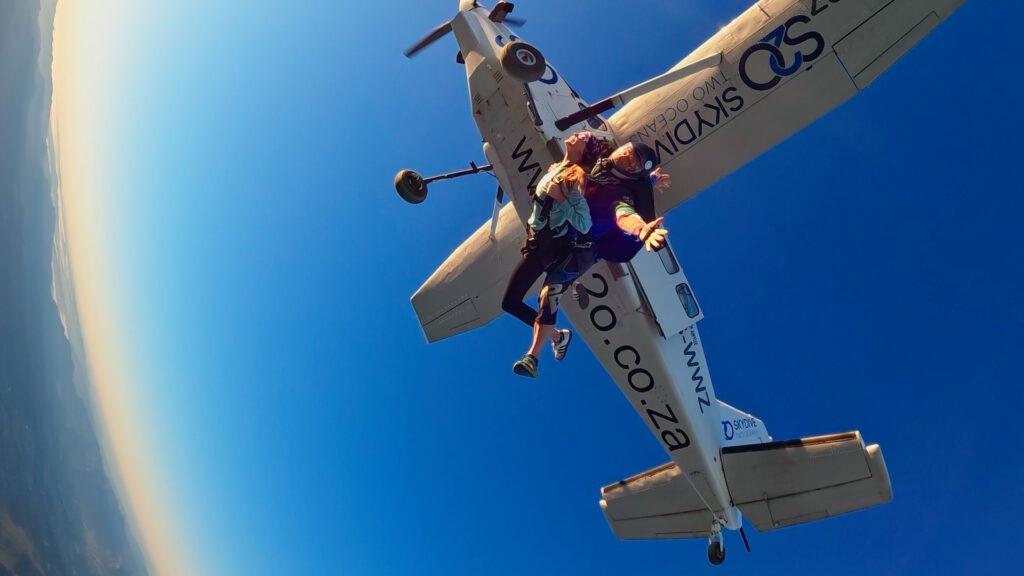
The adventure begins when skydivers take a plane ride up to a specified altitude before jumping from the aircraft and freefalling through the air, before deploying a parachute to slow their descent and land safely back at the ‘drop zone’.
You could say that with skydiving, the freefall is the main point of the experience, while the time when the parachute has been deployed – although enjoyable – is less important overall. Skydiving is definitely an ‘adrenaline junkie’ experience!
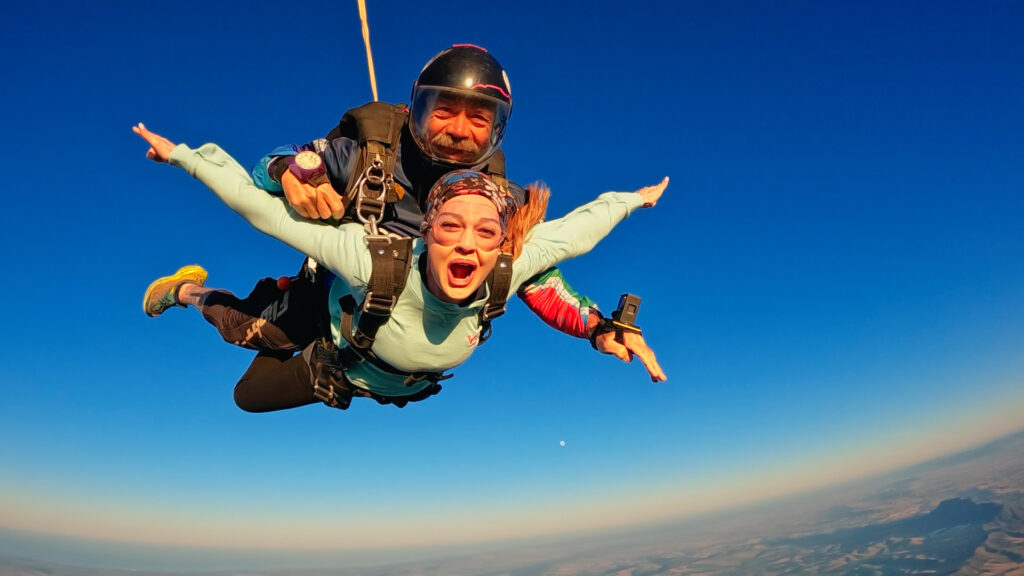
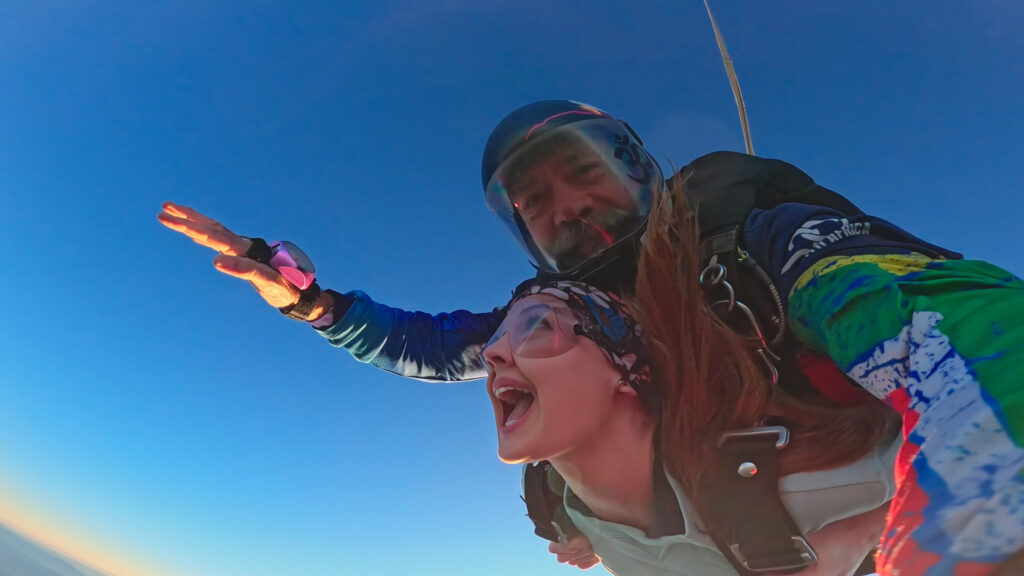
Many first-time or novice jumpers experience skydiving in a ‘tandem jump’, with a professional instructor who handles the technical aspects – which is exactly what Annette and Michelle opted to do.
But more on their actual jump experience shortly – first, let’s take a look at the role that the weather plays in this aerial sport that isn’t geared for the faint-hearted!
Skydiving and the Weather
Annette outlines: “We went skydiving with Blake MacMillan, owner, operator and chief instructor of Skydive Two Oceans, to experience first-hand and in real life how weather conditions shape every jump. It was truly the thrill of a lifetime!”
Certain weather conditions can significantly affect skydiving, and extreme weather can mean that a planned jump might need to be rescheduled. Skydiving is best when there are blue skies, light winds and moderate temperatures. Clouds, rain, wind and extremely low or high temperatures can all be reasons for skydiving to be placed on hold, or cancelled outright.
The weather is monitored constantly, and those in charge are continuously considering on-ground wind speed and observing what they can see. This includes checking what the clouds look like, and how parachutes are handling the wind as the skydivers soar above ground, and when they come in for landing.
Blake explains: “Before every skydiving day at Skydive Two Oceans, a ‘weather group’ comprised of the more senior pilots and sky divers will look at weather forecasts and consider whether they think the weather will be conducive to jumping the next day. We also take into consideration the experience level of the jumpers. On the actual morning, we then look again at what the weather is doing and make our decisions accordingly.”
Annette adds: “The senior skydivers write down the wind speed and direction, from the ground all the way up to the drop altitude, and on the day we went skydiving, the winds were light to moderate, except for a fresh breeze between 2,000 and 3,000 feet, with the wind mainly coming out of an easterly to north-easterly direction.
“And so, taking all this into consideration, the senior skydivers used a formula to calculate that the plane had to fly in an easterly direction against the wind, with the first jumper opening up their parachute approximately 0.1 nautical mile before the drop zone, so that the rest of the jumpers could open up their parachutes between 0.2 and 0.6 nautical miles after the drop zone, allowing everyone to fly back home safely.”
The wind’s direction and strength are important factors when determining the safety of the jump. A gentle breeze or moderate winds don’t present a challenge, but strong winds can be hazardous, leading to unsafe landing conditions. A speed of 25 knots is considered to be the maximum wind speed for safe skydiving, and any winds exceeding this limit are reason to reschedule the jump to a day with better wind conditions.
Wind gusts – meaning sudden, brief increases in wind speed that typically last less than 20 seconds – are also potentially hazardous for skydivers because they can cause sudden, unpredictable changes in speed and direction, making landings more difficult and potentially dangerous. Gusty conditions can also push skydivers off course, causing them to drift into dangerous areas like trees or power lines.
Rain also plays a factor in deciding whether to jump or not – the visibility is lowered, and skydiving gear wasn’t designed to be used in the rain. In addition, raindrops hitting your face at 200 km/h is not a pleasant experience! And so, when there is a high probability of heavy rain, the skydiving will probably be rescheduled. On days with patchy clouds and showers, the weather decisionmakers might wait for the weather to clear before proceeding with the jump.
Clouds can also play a role, because a very low cloud covering the entire landing area may pose a serious risk. In such conditions, it becomes difficult to see the landing site, and the reduced visibility makes it challenging to manoeuvre the descent safely.
Tandem Jumping with SkyDive Two Oceans
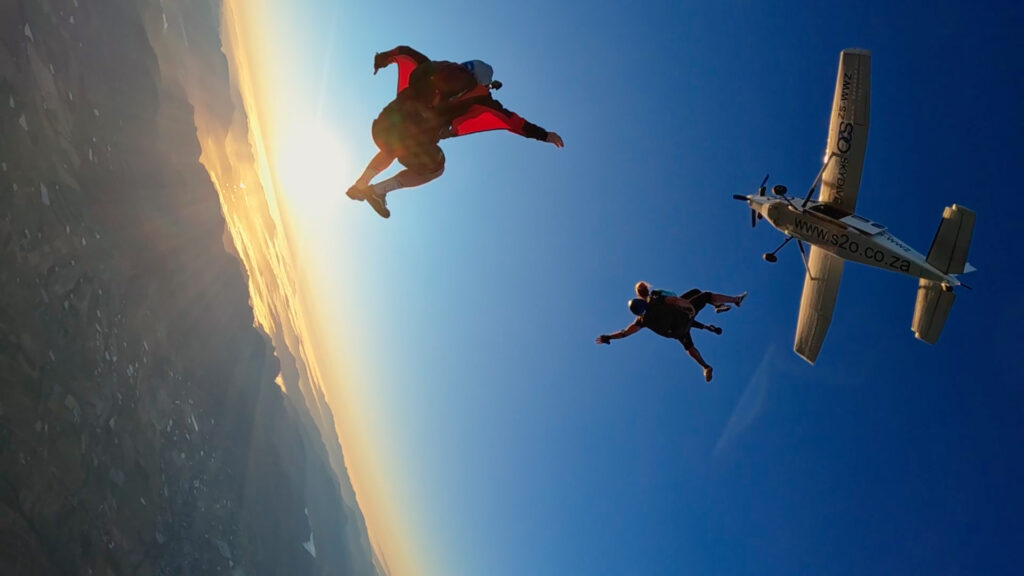
Tandem skydiving involves a certified instructor and a student, rather than the student flying solo. During the tandem skydive, both the instructor and the student jump out of an aircraft together, strapped to each other during the entire descent and sharing a single large parachute. The connecting straps are designed so that the student is in front and the instructor behind, and during the jump, the instructor is floating above the student during the freefall.
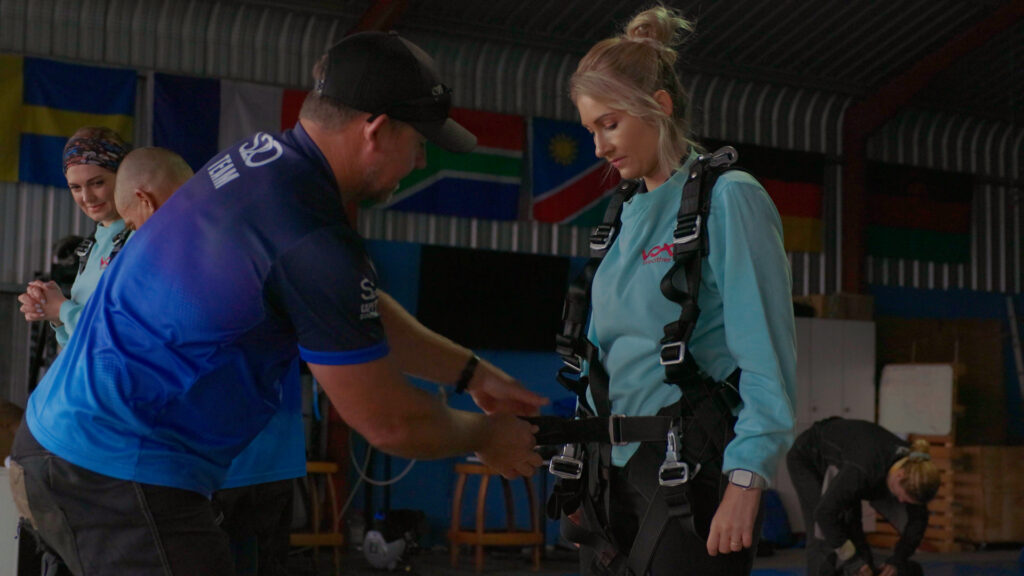
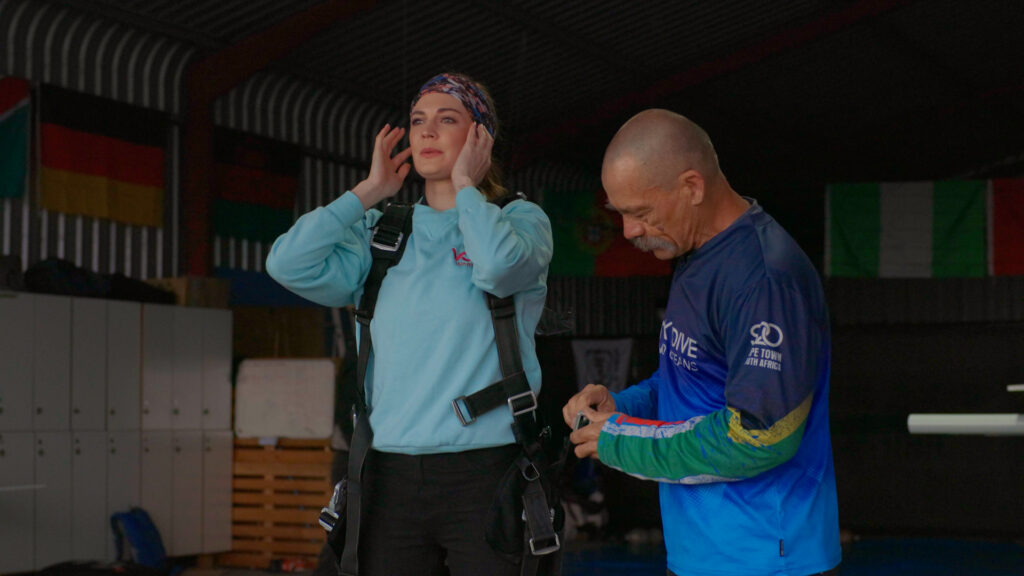
The tandem instructor is responsible for keeping both people in a stable position during the skydive, before deploying the parachute at the right time (and height) and then facilitating a safe landing. Because the instructor does most of the work, the student’s responsibilities are largely limited to watching an orientation video and then going through a briefing with the instructor before getting geared up. All of this can be done right before the skydive, so not a lot of training is necessary.
Those students who particularly enjoy the experience might find that afterwards, they want to take skydiving further and learn to fly solo – but that’s a whole other story!
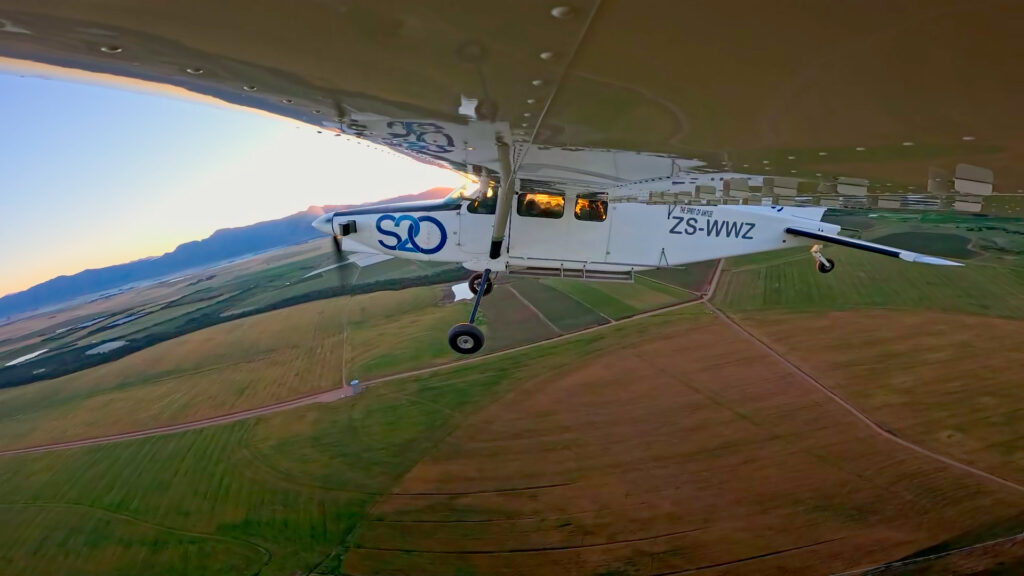
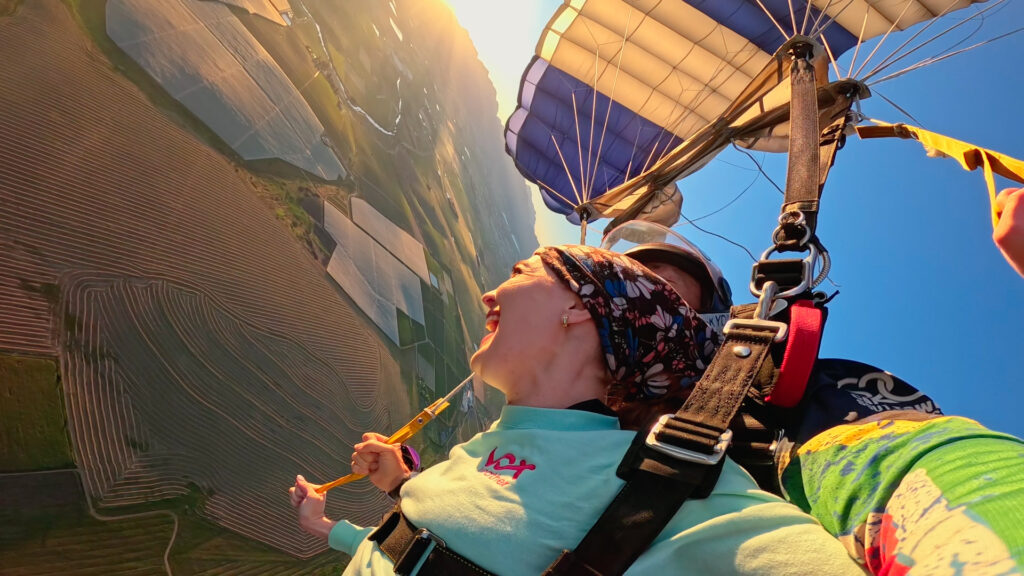
Skydive Two Oceans is situated in the heart of the Cape Winelands, close to the scenic farmlands of Wellington, and less than an hour’s drive from Cape Town’s CBD. As the plane climbs to altitude, the skydivers can see incredible views of the surrounding Winelands, the beautiful Table Mountain, and two sparkling blue oceans.
Blake, who is also primarily responsible for safety and training within his company, says: “I’ve been skydiving for around 25 years now, doing it as a full-time business for just over 18 years and running SkyDive Two Oceans for just on seven years. As well as the thrill of skydiving itself, I got hooked on sky diving partly because of the close-knit community of people, while the venue itself here in the Western Cape is one that is surrounded by beauty!”
After a plane ride of about 25 minutes, Annette and Michelle’s skydiving experience saw them freefalling from an altitude of about 14,000 feet (4.27 kilometres), at a speed of over 190 km per hour!
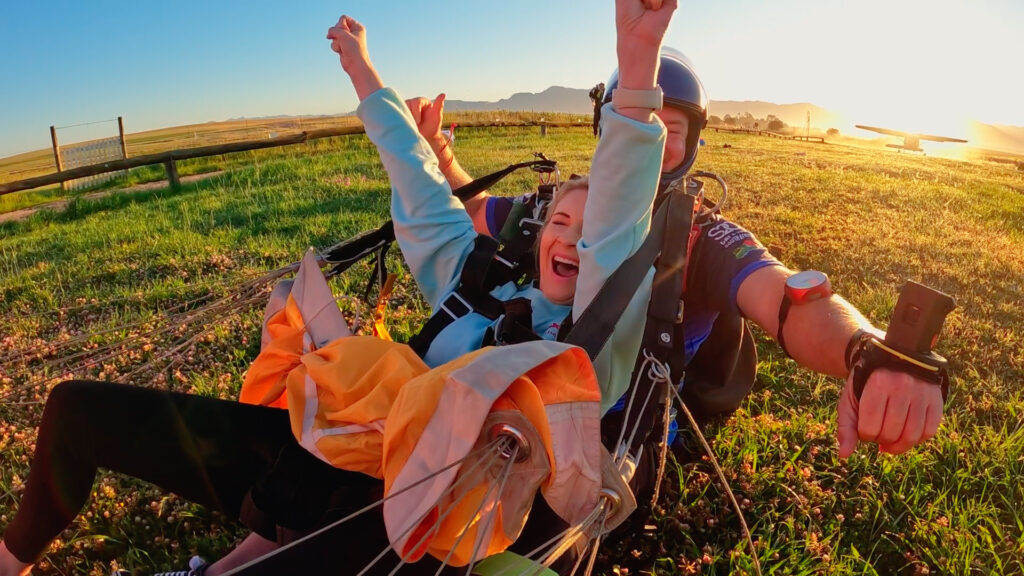
The freefall period lasted between 30 and 35 seconds, with the follow-up parachute ride to descend safely back down to earth lasting about five minutes.
You can watch Annette and Michelle climbing out of the plane strapped to their respective instructors from about 6:50 minutes into the video, with Annette going first – and after that, the rest is now history!
Freedom Calling!
Blake says that skydiving, for him, represents freedom, but he does acknowledge the fear factor, adding: “When you’re sitting on the edge of the plane about to jump out, you will be questioning some of your life decisions leading up to that point!
“But the anticipation is the worst part when it comes to managing your fear – once you’re actually out of the aircraft and in freefall, the fear tends to go away and you just enjoy the experience and start to have fun, especially when you’re doing it with a trained professional.
“The more you do it, the better it becomes, and so we always encourage people to try it out more than once in their lifetimes. After the first time, your brain has now processed matters somewhat and it feels more familiar and becomes easier.”
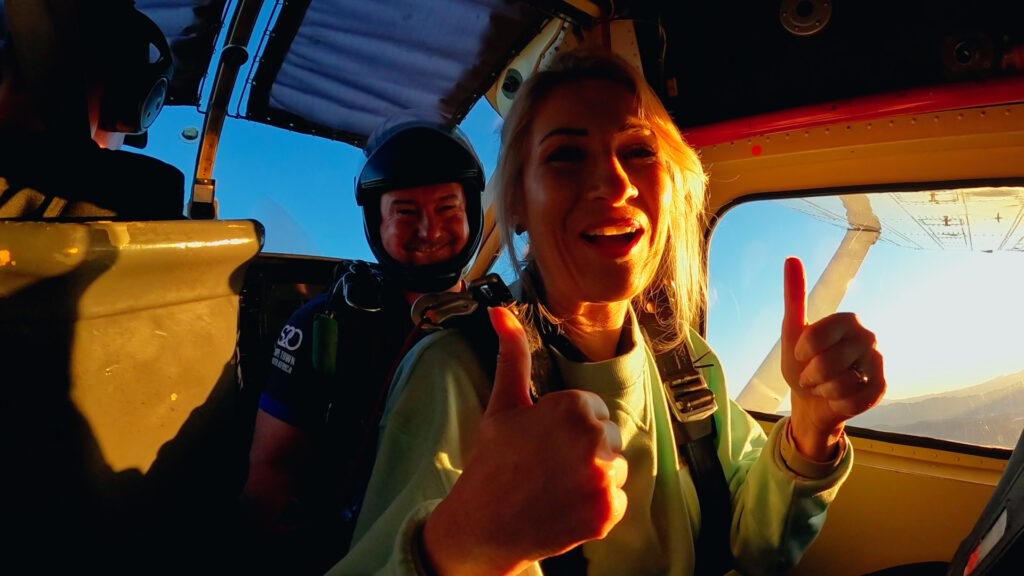
Certainly the video shows Annette and Michelle looking nervous to a greater or lesser degree at various moments before and during the plane ride! But having overcome their nerves, there are no regrets.
“We once again took forecasting to new heights,” says Annette, “and it was awesome! In our opinion, it felt less like falling and more like flying! This is where weather meets wonder…”
“Yes,” agrees Michelle, “it was an adrenaline rush and a moment of freedom that we wish everyone could experience at least once in their lives! Huge thanks to Skydive Two Oceans for taking us on the ride of a lifetime!”
“Once you have tasted flight, you will forever walk the earth with your eyes turned skyward, for there you have been, and there you will always long to return.” ~ from the 1965 film: ‘I, Leonardo da Vinci’