Vox Weather Meteorologist Michelle du Plessis discusses issues around water security as Cape Town starts to enter its dry summer period.
The terrible memories of Cape Town’s ‘Day Zero’ crisis of 2015 to 2018 might have been subsequently overtaken by the equally-dismal memories of the global Covid-19 pandemic (2020 to 2021) but worries about a future Day Zero possibility still loom large in the minds of many Capetonians.
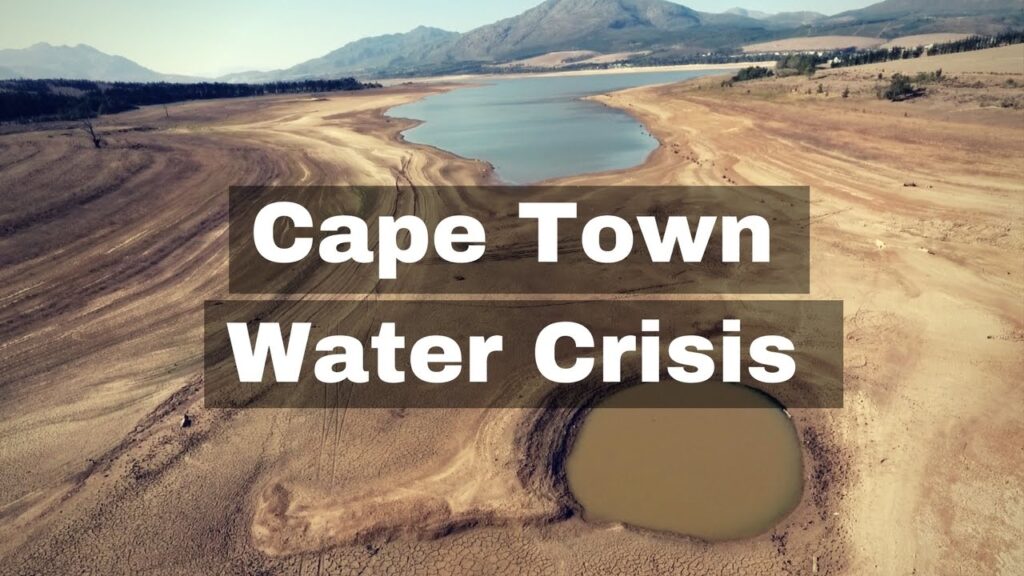
“The Day Zero crisis proved that the ongoing viability of Cape Town’s water supply is a critically important issue,” says Michelle. “Between 2015 and 2018, Cape Town endured a one-in-400-year drought that took the city of around 4.6 million residents to the brink of ‘Day Zero’, meaning a point when Cape Town would run out of water.
“Fortunately, Day Zero did not actually arrive in 2018, due to a combination of sustained public communications, water rationing measures, engineering solutions and of course, the fact that the long-awaited rains finally fell. If ‘Day Zero’ had been implemented, residents would have had to queue for daily water rations of just 25 litres per person.”
(Here is a detailed account of what it’s potentially like to live on 25 litres of water per person per day.)
After coming through the potential Day Zero crisis, Cape Town as a city and a community has tried to make the concept of water savings into an ongoing culture, with a proactive bid to use less than 950 million litres daily. The aim is to avoid low-level water restrictions during summer periods if the city should experience below-average winter rainfall.
Recently, however, news reports have indicated that the city has been consistently exceeding this target water usage of 950 million litres per day for a number of weeks in a row. Is it time to worry, or too soon to panic?
Let’s see what Michelle has to say.
Where Dam Levels Stand Now
The Western Cape is known for being a winter rainfall area – its summers are dry and hot. So as we leave memories of winter behind us, it’s useful to look at how full the relevant dams are.
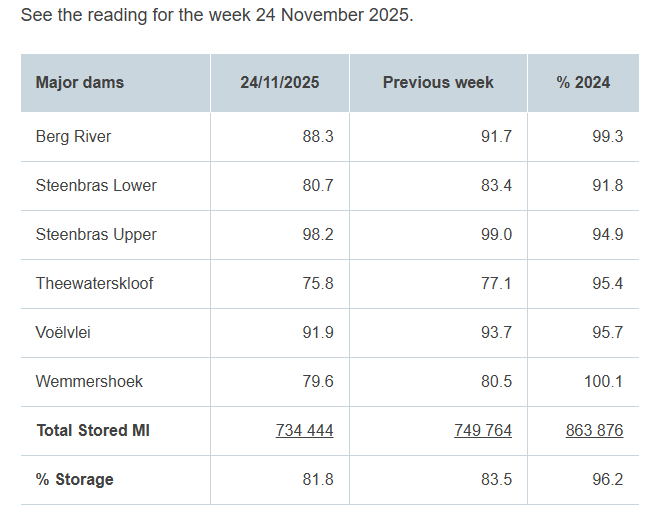
“Right now,” says Michelle, “the six major dams supplying Cape Town – namely the Theewaterskloof, Voëlvlei, Berg River, Wemmershoek, Steenbras Lower and Steenbras Upper Dams – are just under 82% full on average, with the Western Cape Water Supply System sitting at about 81.8% as of 24 November 2025.
“That is roughly 10% to 15% lower than this time last year and the system was dropping through November by about 1.5% to 1.7% per week, as we moved deeper into the hot, windy season.”
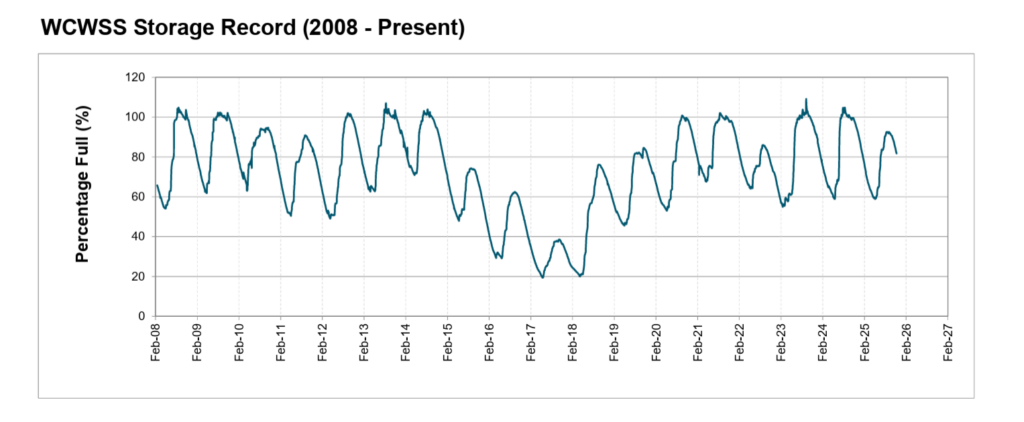
She continues: “That year-on-year drop is real and important, but it is also very different from Day Zero. During the 2017/2018 crisis, combined dam levels spent months between about 14% and 29% of capacity, with Theewaterskloof, the largest of Cape Town’s dams, hovering around 12% to 15% at the worst point.
“So, Day Zero was a crisis of dams in the teens and twenties. Today we are worrying at around 80%. That tells you two things: firstly, that the psychological scar of 2018 is still deep, and secondly, that officials are deliberately building in a much earlier ‘yellow flag’ to avoid drifting back towards that territory.”
She adds that in fact, the City’s own weekly water dashboard has moved the system into an ‘Early Drought Caution’ phase, explicitly noting that although the big dams are about 10% lower than last year, there is no immediate reason for concern and no additional restrictions expected for the next year under current planning.
Michelle notes: “The message is to stay water-wise now because this could be the start of a new dry cycle, not because taps are about to run dry.”
Outlook for this Summer
As we move into summer, we are not expecting much rain for Cape Town, simply because it is a winter rainfall region, says Michelle.
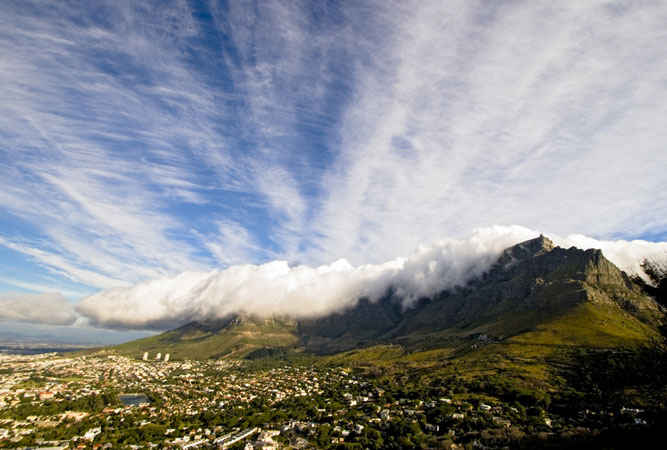
“Most of the big dam-filling weather systems are cold fronts that move through the region between about May and September. During summer, there can still be the occasional weak front brushing the south-western Cape, or a cut-off low that manages to bring some showers, especially over the mountains, but these are the exception rather than the rule.
“For the most part, conditions will remain hot, dry and often windy. We should expect dam levels to keep edging down through December, although the exact rate of decline will depend on daily wind and temperature.”
Wind is a key part of the story, she notes, with the south-easterly ‘Cape Doctor’ climatologically strongest from about spring right through to late summer.
Michelle clarifies: “Strong, dry winds blowing over warm water surfaces accelerate evaporation from dam surfaces and from gardens, parks and agricultural fields. October was unusually windy, and the data show evaporation and usage together have been pulling levels down by more than 1% per week.”
And so we pose the question: Will the winds start dying down soon and slow the rate of evaporation?
Michelle confirms: “We are still in the core of the south-easter season and can expect further windy episodes through December, January and February, with the occasional calmer day where evaporation will be lower.
“So, we cannot ‘wait for the wind to calm down’ as a water-saving strategy. The levers we can control are usage, losses and how quickly water-wise habits are reinforced.”
Longer-term Outlook for the Western Cape
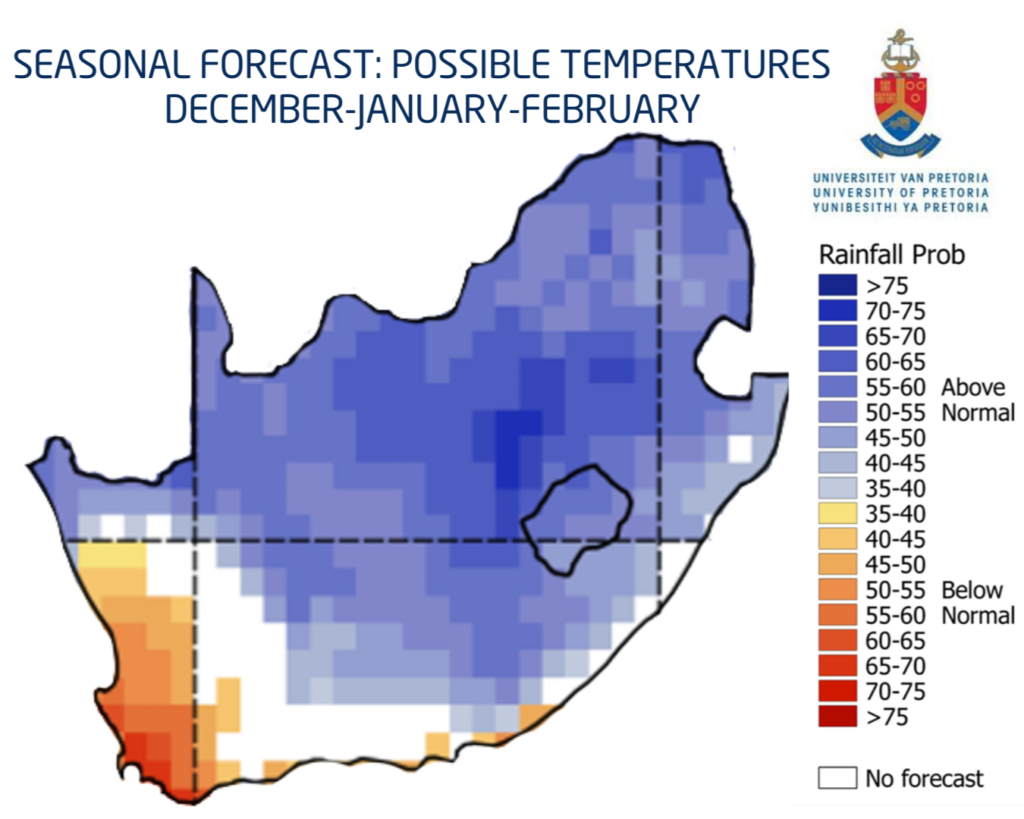
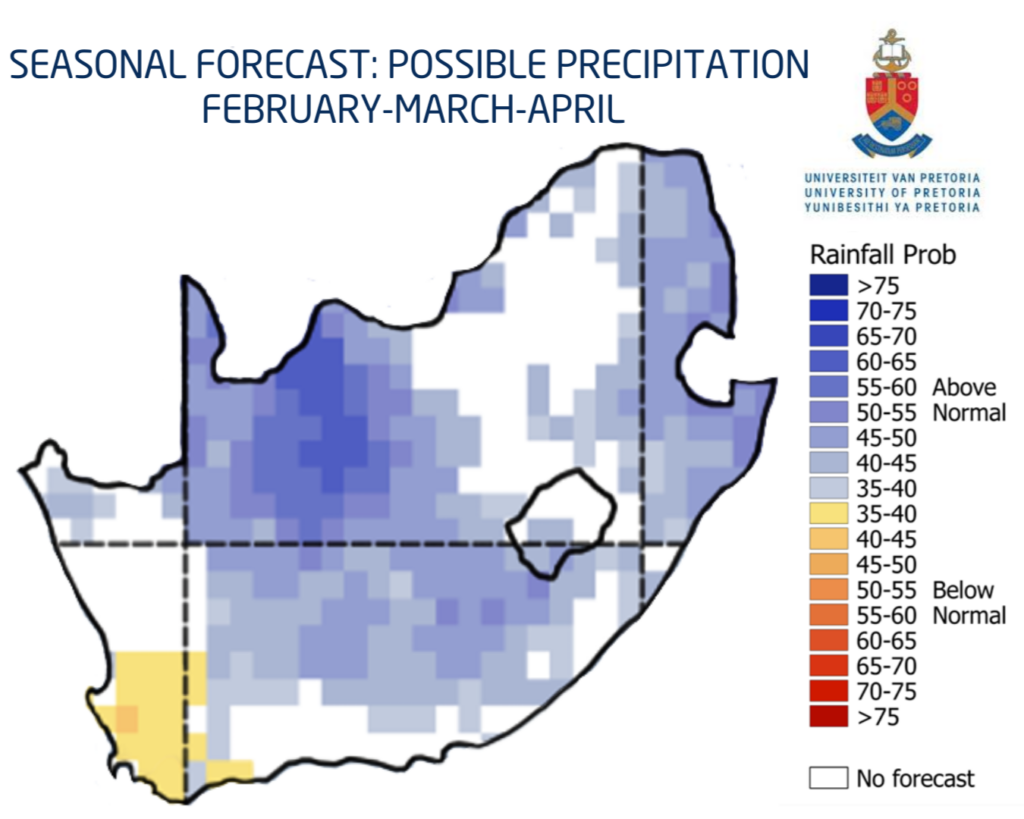
Seasonal climate forecasts for late spring and early summer 2025/26 point to above-normal rainfall over much of South Africa’s interior, in line with a La Niña pattern.
“For the south-western Cape, however, there is no strong signal for a wetter-than-normal summer – and climatologically, this is our dry season in any case. The University of Pretoria’s latest seasonal outlook further suggests the possibility of below-average rainfall through autumn, with above-normal temperatures favoured along the southern coastal areas and south-western Cape during both summer and autumn.
“What this means in practice is that, through this summer, rainfall is unlikely to play a major role in stabilising dam levels. Under typical conditions and current usage, we can expect a continued gradual decline as we move towards late summer and early autumn. The real test will be the next winter rainfall season.”
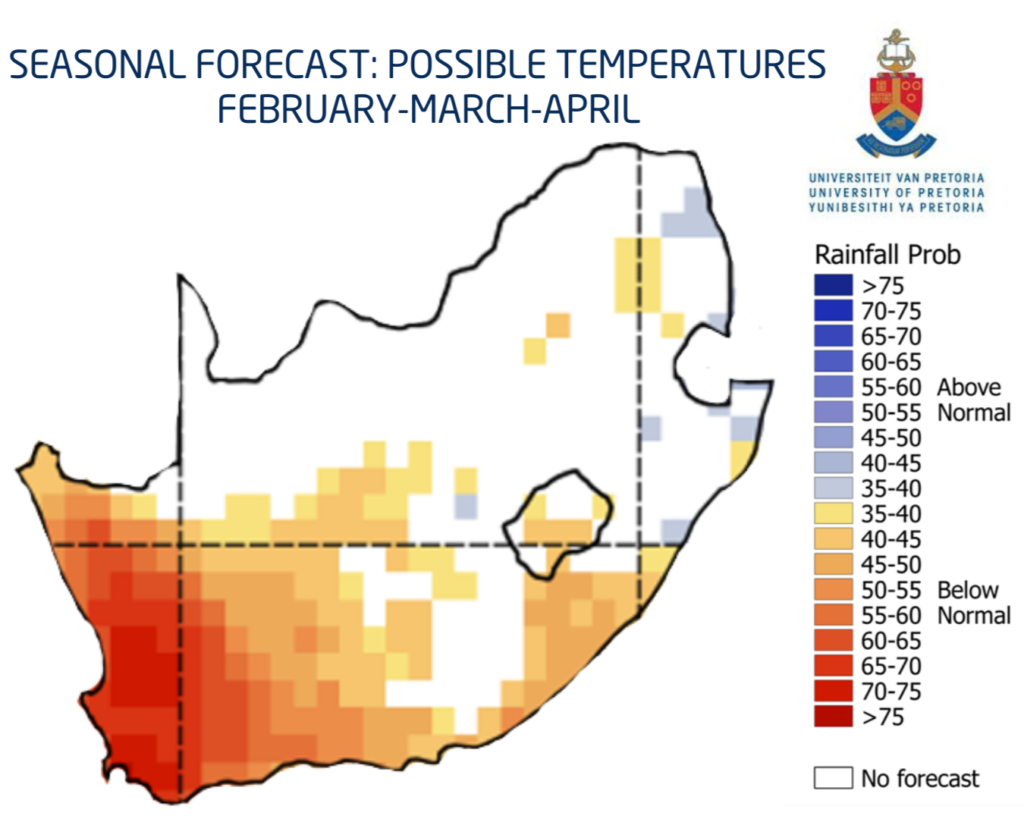
According to Michelle, if 2026 delivers an ‘average’ winter in the key mountain catchments, current projections from the City suggest that the system will remain in a comfortable zone without needing Day Zero-type emergency measures.
She cautions: “However, the risk comes in if we once again experience several below-average winters in a row. Climate change is increasing the variability of rainfall in the south-western Cape, and that means planning must assume that sequences of dry winters are more likely than they used to be.
“The important distinction is this: we are not forecasting ‘Day Zero 2.0’ for next year. But the dam levels are clearly lower than they have been for several consecutive summers, and that is exactly the kind of early warning signal we should respond to while there is still plenty of water in storage.”
The ‘long story short’ is that Michelle says we should treat current statistics as a wake-up call, not a reason to panic.
“Use water wisely now, while the system is still around 80% full, so that we maintain as much buffer as possible going into the next few winters,” she concludes.
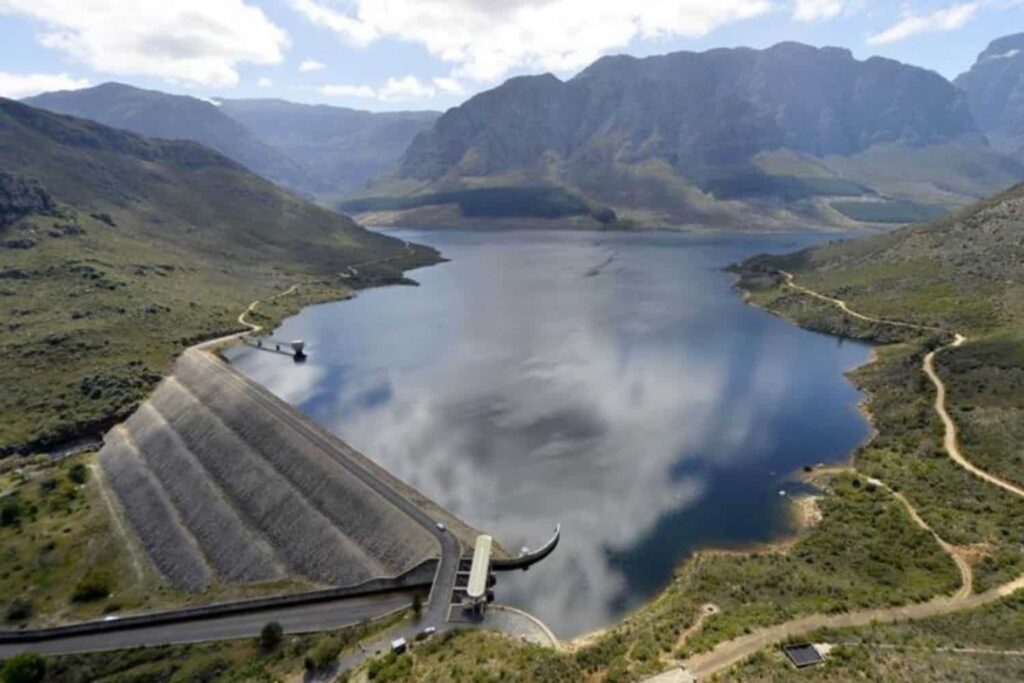
(Image below: Wemmershoek Dam, courtesy City of Cape Town website)